 To understand varicose veins and the risks involved with not getting treatment for them, you first have to know something about the circulatory system and a condition called chronic venous insufficiency (CVI).
The circulatory system consists of two parts that join together to form a continuous loop. The arterial side pumps oxygenated blood from the heart to all of the body’s tissues, while the venous side pumps deoxygenated blood from the tissues back up to the heart.
The problem is that the venous system has to move blood against the pull of gravity, so it devised systems to ensure the blood keeps moving. One is muscle contractions in the calves and thighs that squeeze the veins and push blood forward. Another is one-way veins that snap shut after the blood has passed by.
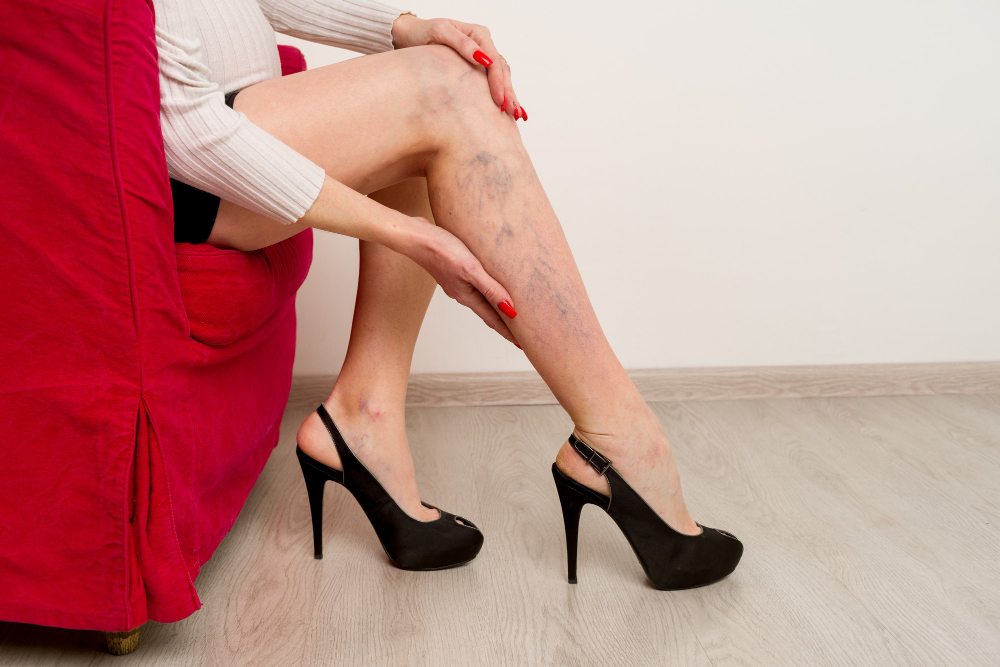
If the veins or their valves become damaged, they can’t manage blood flow as well as is necessary, and blood starts pooling in your leg veins, leading to high pressure and stagnant flow — CVI. When the blood pools in the superficial veins, they engorge, and you develop colored, ropy protrusions on your legs and ankles — varicose veins.
At Advanced Surgical Associates of Northern Minnesota, board-certified general surgeon Dr. John Bollins and our team diagnose and treat varicose veins in our patients at our Hibbing, Duluth, and Ely, Minnesota, offices. While the veins aren’t particularly dangerous, failure to treat them is. Here’s why.
The progression of vein disease
Varicose veins are superficial veins, but CVI can also affect the deep veins in the legs. If you notice warmth and swelling in an area of your leg, you may have deep vein thrombosis (DVT).
DVT occurs when a clot develops in one of these deep veins. The clot further impedes blood flow back to the heart, and it can also produce problems if the clot (or part of it) breaks free of the vein wall and travels through the bloodstream to the lungs. It can lodge in one of your airways, blocking your breathing.
This condition is called a pulmonary embolism, and it’s a life-threatening emergency.
If you don’t treat the DVT, the deep and superficial veins may start leaking blood and fluid into the surrounding tissue, causing it to swell. This condition is called edema. It further impedes blood flow back to the heart and causes itching, pain, inflammation, and skin flakiness from the irritation the fluid causes.
The skin may change in other ways, too. It may take on an orange-brown appearance from hemosiderin, a breakdown product of hemoglobin. The legs may start to hurt as well as itch, and their texture may become leathery. This stage, called venous stasis dermatitis, puts you at risk for the next stage.
That stage is slow- or non-healing ulcers on your legs and ankles, which can easily become infected. If you develop such an ulcer, getting treatment immediately is important. An ulcer that won’t heal causes severe damage to both soft tissues and bone, and if the infection can’t be controlled, it may require amputation of a toe, foot, or part of a leg.
Most lower leg and foot amputations, especially in people with diabetes, begin with foot ulcers.
The importance of early intervention
Fortunately, treating varicose veins as soon as they show up can avert the progression of disease and keep your legs and blood flow healthy. Though for some, varicose veins are just a cosmetic nuisance, they have the risk of being much more detrimental to your overall health. It’s best to seek medical attention as soon as possible.
Minimally invasive treatments such as sclerotherapy or venous ablation can permanently remove the damaged veins, restoring circulatory health.
If you’ve noticed varicose veins snaking around your legs, it’s time to get rid of them for good, and Advanced Surgical Associates of Northern Minnesota can help.
To schedule a consultation with Dr. Bollins, call our office in Hibbing, Duluth, or Ely, Minnesota, or book your appointment online.
We proudly accept Aetna, BlueCross BlueShield, Cigna, HealthPartners, Humana, UCare, Medica, and SecurityHealthPlan.